

 News
News Industry News
 In industrial production, mining, and environmental monitoring, gas leaks and excessive emissions are often accompanied by serious safety hazards and environmental pollution. Hydrogen chloride (HCl), a common toxic and harmful gas, is colorless and highly irritating, making it difficult for humans to directly detect, yet it easily poses a threat to human health, equipment safety, and the atmospheric environment. Achieving highly sensitive, reliable, and real-time monitoring of its concentration has become a critical issue that many enterprises and environmental management departments urgently need to address.
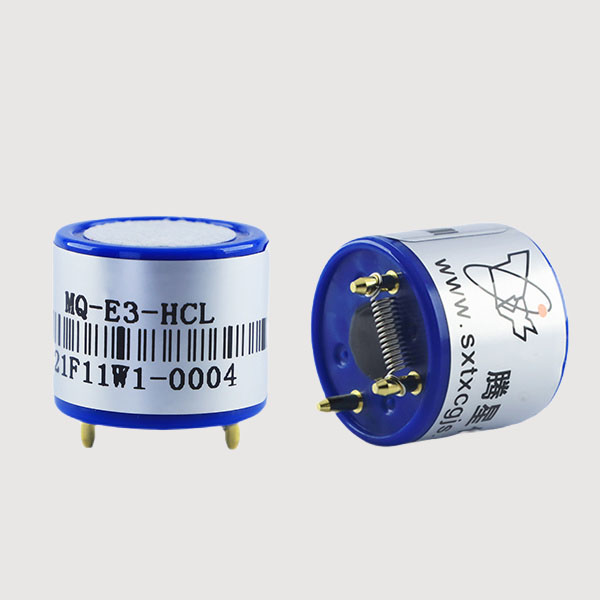
MQ-E3-HCl Electrochemical HCl Sensor
Tensensor's independently developed MQ-E3-HCL hydrogen chloride gas sensor is a professional monitoring tool designed to solve this problem. This sensor employs an advanced constant-potential electrolysis detection principle, converting the gas concentration signal into a linear current output through an internal redox reaction. It offers rapid response and accurate measurement, providing stable and reliable technical support for hydrogen chloride leak early warning and process control.
Recommended Core Advantages

1. High Precision and Wide Linearity, Adaptable to Complex Operating Conditions
The MQ-E3-HCL boasts a wide measurement range of 0~20ppm and a high resolution of 0.1ppm, with a maximum measurement limit of 200ppm, covering a broad concentration range from background levels to accidental leaks. Its linear output characteristics, combined with repeatability of less than 2% and monthly stability, ensure the reliability and consistency of long-term monitoring data, making it particularly suitable for continuous process monitoring in industries such as chemical, electroplating, and pharmaceuticals.
2. Rapid Response and Strong Anti-interference, Enhancing Early Warning Timeliness
The T90 sensor has a response time of ≤ 30 seconds, allowing for rapid reactions to changes in gas concentration, buying valuable time for emergency response. Simultaneously, its excellent cross-interference suppression capabilities (such as extremely low response to common gases like carbon monoxide and methane) significantly reduce the risk of false alarms, ensuring that monitoring results accurately reflect hydrogen chloride concentration, making it especially suitable for complex industrial environments with multiple gases coexisting.
3. Strong environmental adaptability and high reliability
Operating temperature ranges from -20℃ to 50℃, and humidity ranges from 15% to 90% RH, adaptable to most indoor, outdoor, and underground environments. The sensor uses a solid-state electrolyte design with no moving parts, a robust structure, and is vibration- and shock-resistant, with a lifespan of up to two years, significantly reducing maintenance frequency and operating costs.
4. Low power consumption design for easy integration and deployment
Recommended load resistance is only 10Ω, and with a wide voltage supply of 3.3–5.5V, it can be easily embedded in various portable detectors, fixed monitoring systems, or IoT sensor nodes, meeting the needs of distributed deployment and remote monitoring, and contributing to the construction of smart factories and intelligent environmental networks.
5. Comprehensive safety protection and clear usage instructions
The product manual details precautions for installation, aging, and storage, emphasizing avoiding soldering, contact with organic solvents, and mechanical damage. It also reminds users of the slow recovery characteristics after exposure to high concentrations, helping users use the sensor scientifically, extending its lifespan, and ensuring long-term stable system operation.
Application Scenarios
Industrial Safety Monitoring: Used for hydrogen chloride leak detection and alarm in chemical plants, semiconductor manufacturing, metal processing, and other on-site environments.
Underground Mine Environmental Monitoring: Monitors potentially harmful gases generated during blasting or equipment operation to protect miners' health.
Atmospheric Environmental Monitoring: Deployed at industrial park perimeters, waste incineration plants, sewage treatment plants, etc., to achieve real-time monitoring and data traceability of emission sources.
Emergency Response and Inspection: Used with portable equipment for rapid accident site assessment and daily safety inspections.
Driven by the dual trends of safe production and green development, accurate and reliable gas monitoring technology has become an indispensable part of modern industrial and environmental protection systems. The MQ-E3-HCL hydrogen chloride sensor, with its excellent performance indicators, strong environmental adaptability, and clear usage specifications, provides users across various industries with an integrated solution from sensing to early warning. Choosing the MQ-E3-HCL is not just choosing a high-performance sensor, but also adding an "invisible intelligent defense line" for personnel safety, production stability, and environmental protection.
Web: www.tensensor.com
Email: [email protected]
WhatsApp: +86 18335818384
 Message
 E-mail
 Whatsapp


